Your calendar is packed with meetings, but are they actually helping you get work done? The answer, according to 2025 workplace data, is increasingly "no."
Employees now spend 16 full workdays per year in meetings, yet consider 67% of them unproductive. Meanwhile, the average meeting length has crept up 10% over the past 15 years, and ad hoc calls interrupt focused work every few minutes. The numbers paint a clear picture: meeting culture is broken, but the data also reveals exactly where teams can fix it.
What Are Meeting Statistics?
Meeting statistics are quantitative measures of how much time organizations spend in meetings, their effectiveness, and their impact on productivity. These metrics help teams understand whether their collaborative time drives results or creates workplace friction.
The most revealing 2025 statistics come from surveys of over 50,000 professionals across multiple industries, tracking everything from meeting frequency to post-meeting productivity impacts.
The Meeting Overload Crisis: Time and Attention Stats
The numbers behind meeting overload are staggering. A typical employee spends 392 hours annually in meetings. that's more than 16 full workdays devoted to discussions, planning, and coordination.
But raw meeting time tells only part of the story. Microsoft's Work Trend Index 2025 reveals that 57% of meetings are completely ad hoc, with no calendar invitation or advance notice. These unscheduled calls fragment focus time, contributing to what researchers call the "infinite workday."
The coordination tax goes beyond scheduled time. Business professionals spend 4.75 hours weekly just arranging meetings. coordinating schedules, booking rooms, and managing logistics. In large organizations, 40% of workers waste up to 30 minutes daily searching for collaboration spaces before meetings even begin.
Meeting lengths are expanding too. The average session has grown 10% over 15 years, and Clockwise's 2024 analysis shows meeting duration typically increases 6% from January to May as organizational momentum builds throughout the year.
Perhaps most telling: employees say more than two hours of daily meetings crosses the "too much" threshold, yet 35% of leaders spend three or more hours daily in meetings and email combined.
Virtual Meeting Behavior: The Multitasking Problem
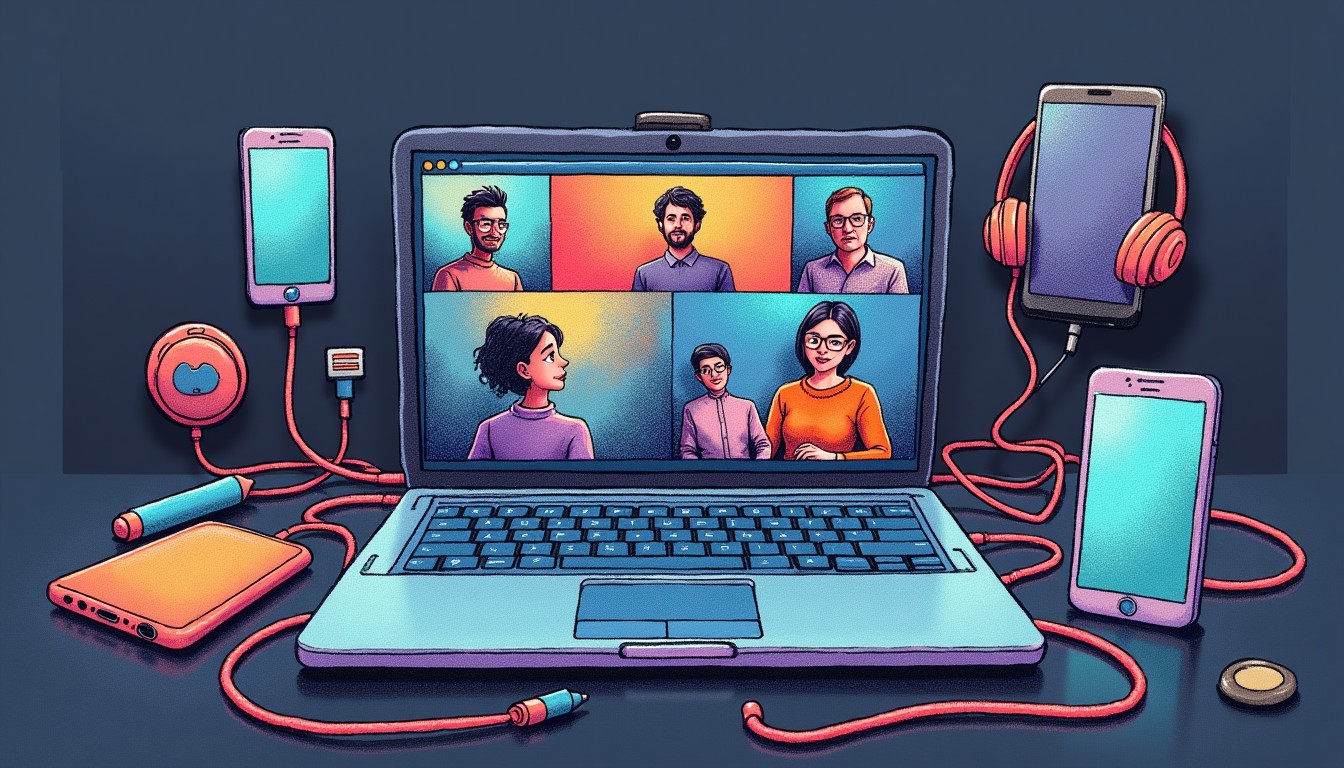
Virtual meetings promised efficiency but delivered new challenges. More than half (52%) of employees multitask often or always during video calls with multiple attendees, according to Calendly's 2024 research. The generational divide is stark: 75% of Gen Z workers multitask constantly during virtual meetings, compared to just 34% of Baby Boomers.
The "meeting hangover" phenomenon affects over 90% of workers after unproductive sessions. Harvard Business Review's survey identified the top culprits: irrelevant topics (59%), lack of clear agendas (59%), and poor time management (53%).
Engagement drops predictably. More than half of employees lose attention within the first 30 minutes of any meeting, explaining why ultra-long sessions fail. Flowtrace data shows 5% of video calls last under five minutes while 10% exceed an hour. both extremes signal poor meeting design.
PowerPoint edits spike 122% in the final 10 minutes before meetings, Microsoft reports. This digital cramming mirrors exam preparation more than professional collaboration, reflecting how teams rush preparation instead of planning ahead.
When I record virtual meetings for later reference, I've noticed the same patterns in our own team calls. People zone out around the 25-minute mark, side conversations emerge in chat, and the most important decisions often happen in the final five minutes when everyone's rushing to wrap up.
What Makes Meetings Actually Productive?

The data reveals clear patterns separating effective meetings from time-wasters. Recurring meetings average 28 minutes. much shorter than one-off sessions at 41 minutes. suggesting routine check-ins work best when kept focused.
Successful meetings follow the "Rule of 7". keeping attendance at seven people or fewer. Smaller groups maintain focus, increase participation, and reach decisions faster than larger gatherings.
The biggest predictor of meeting productivity isn't the technology or duration. It's what happens afterward. Teams that consistently share follow-up notes, summaries, and action items report significantly higher meeting satisfaction and outcome achievement.
Here's where modern AI transcription tools like Scriptivox become essential. Instead of assigning someone to take notes (which reduces their participation), teams can automatically capture everything with word-level timestamps. Upload a meeting recording, and within minutes you have searchable transcripts with speaker identification. perfect for generating those crucial follow-up summaries.
The workflow is straightforward: record your meeting, upload the file to get an accurate transcript, then use the AI chat feature to extract action items and key decisions. No more "who's taking notes?" discussions or post-meeting scrambles to remember what was decided.
Tuesday emerges as the optimal meeting day, with 39% of HR managers ranking it most productive. Friday meetings see notably lower energy and focus, while Monday sessions suffer from planning backlogs.
The Future of Meeting Culture: 2026 Predictions
Meeting culture is shifting toward what Microsoft calls "Frontier Firms". organizations that follow the 80/20 rule, focusing meetings on the 20% of work driving 80% of outcomes. These companies report 71% of workers saying they're thriving, compared to just 37% globally.
Gen Z's communication preferences will reshape norms. Jabra's research shows 29% of Gen Z feel more connected through chat messages than casual video catch-ups, signaling a preference for asynchronous, digital-first interaction.
Hybrid work has solidified as the long-term standard, with 60% of employees preferring flexible arrangements. This stability means meeting formats must accommodate distributed teams permanently, not temporarily.
The "meeting minimalism" movement is gaining traction. With 60.3% of professionals saying meetings hamper productivity and 75% battling digital exhaustion, organizations are adopting dramatic meeting reductions to protect focus time.
People data will become strategically important. Workforce intelligence will help leaders understand how capabilities, agility, and collaboration drive outcomes. moving beyond simple headcount metrics to optimize meeting effectiveness at scale.
Making Your Meetings Worth the Time
The statistics point to clear solutions. Start by auditing your actual meeting load. track how many hours you spend weekly in scheduled versus ad hoc calls. Most teams discover they're spending far more coordination time than they realized.
Set boundaries on meeting length and frequency. The data shows diminishing returns after 30 minutes and productivity drops after two daily hours of meetings. Protect focus time by clustering meetings into specific days or time blocks.
Document everything automatically. The clearest predictor of meeting success is consistent follow-up, but manual note-taking reduces participation. Recording and transcribing meetings ensures nothing falls through the cracks while keeping everyone engaged in real-time discussion.
When you need reliable meeting documentation, you can test this workflow free at Scriptivox. upload any audio or video file and get accurate transcripts with speaker identification in over 100 languages.
Frequently Asked Questions
About the author

Arsh co-founded Scriptivox and built the core of what it runs on: the AI models, the API, the meeting bot, and the technical infrastructure that keeps transcripts accurate at scale. He also handles customer support directly, because the people building the product should be the ones talking to the people using it. He writes about real transcription workflows for legal, research, and content teams, grounded in the systems he ships and maintains himself.