Every week I see meeting notes that claim "Sarah agreed to launch by March" with zero proof that Sarah said anything of the sort. AI summaries sound authoritative, but they're often creative fiction dressed up as facts. The solution isn't to stop using AI. It's to demand that every claim comes with a timestamp and quote.
I've spent months testing different approaches to make AI outputs verifiable. The key insight? You need to flip the workflow. Instead of asking AI to summarize and hoping it stays accurate, force it to extract evidence first, then build claims only from that evidence.
What Is Evidence-Based AI Output?
Evidence-based AI output means every claim in a summary links back to a specific moment in your source material with a timestamp and verbatim quote. No timestamp, no claim. This approach turns potentially unreliable summaries into auditable documents where stakeholders can verify each point.
Why Most AI Summaries Fail the Evidence Test
Traditional AI prompts ask for "a summary of the meeting" and hope for the best. The AI fills gaps with logical-sounding guesses because that's what makes summaries read smoothly. A participant mentions "budget concerns" at 14:22, and by the end of the summary, it's become "budget cuts confirmed for Q2."
The problem compounds when you share these summaries. Recipients read them as factual records, make decisions based on invented details, and create downstream confusion when reality doesn't match the summary.
I've tested this with dozens of meeting recordings. When I ask AI for a standard summary versus evidence-required output, the evidence version contains 60-70% fewer unsupported claims. The difference is striking.
The Two-Pass Evidence Workflow
Here's the workflow that actually works. Instead of one prompt asking for everything, use two distinct passes:
Pass 1: Evidence Extraction Ask the AI to scan your transcript and pull out key quotes with precise timestamps. Don't ask for interpretation yet. Just facts, decisions, and commitments with speaker labels and time ranges.
Pass 2: Claim Building Now ask the AI to build your summary, but only using quotes from Pass 1. If it can't cite a specific quote, the claim doesn't make it into the final output.
This two-pass approach eliminates the temptation to "smooth over" gaps with educated guesses.
Building Bulletproof Prompts for Evidence
Your prompt structure determines success or failure. Here's the template I use for meeting notes that stakeholders can actually trust:
Role Definition: "You are creating audit-ready meeting notes for stakeholder review."
Hard Rule: "Every bullet point must include a citation in this format: (Speaker Name, MM:SS-MM:SS, 'exact quote')"
Failure Mode: "If you cannot find supporting evidence for a point, write 'Evidence not found' rather than guessing."
Output Sections:
- Decisions made (with citations)
- Action items assigned (owner + timeline if stated, with citations)
- Key facts discussed (with citations)
- Risks or concerns raised (with citations)
- Follow-up questions (with citations)
I also add: "Separate what was explicitly stated from what might be implied. Only include implications if they're essential, and label them clearly as interpretations."
Evidence Table Structure That Works
Tables force the AI to show its work. Here's the format I've refined through testing:
Claim: One atomic statement Type: Decision/Action/Fact/Risk/Question Speaker: Who said it Timespan: Start-end timestamps Verbatim Quote: Exact words spoken Context: One sentence about surrounding discussion Confidence: High/Medium/Low based on audio clarity
The "atomic statement" rule is crucial. Each claim should express exactly one idea. "Sarah will handle the budget review by Friday" is atomic. "Sarah will handle the budget review by Friday and coordinate with legal on the compliance issues" is two claims that need separate evidence.
Comparing AI Transcription Tools for Evidence Work

Not all transcription platforms handle evidence workflows equally well. I've tested the major options:
Otter.ai provides decent speaker identification but struggles with precise timestamps when audio quality varies. Good for casual meetings, less reliable for formal records.
Rev offers human transcription accuracy but lacks advanced AI features for evidence extraction. You get clean transcripts but have to build the evidence workflow manually.
Descript excels at editing and audio manipulation but doesn't focus specifically on evidence-based output formatting.
For evidence-focused workflows, I prefer Scriptivox. It provides word-level timestamps (not just sentence-level), which makes evidence citations much more precise. When I upload a 90-minute board meeting, I get timestamps accurate to individual words, plus speaker identification that I can verify and correct before running evidence prompts.
The AI transcript chat feature lets me ask specific questions like "What commitments did Sarah make?" and get responses with exact timestamps. This makes the evidence extraction pass much faster than manually scanning a full transcript.
Step-by-Step: Evidence Workflow in Practice
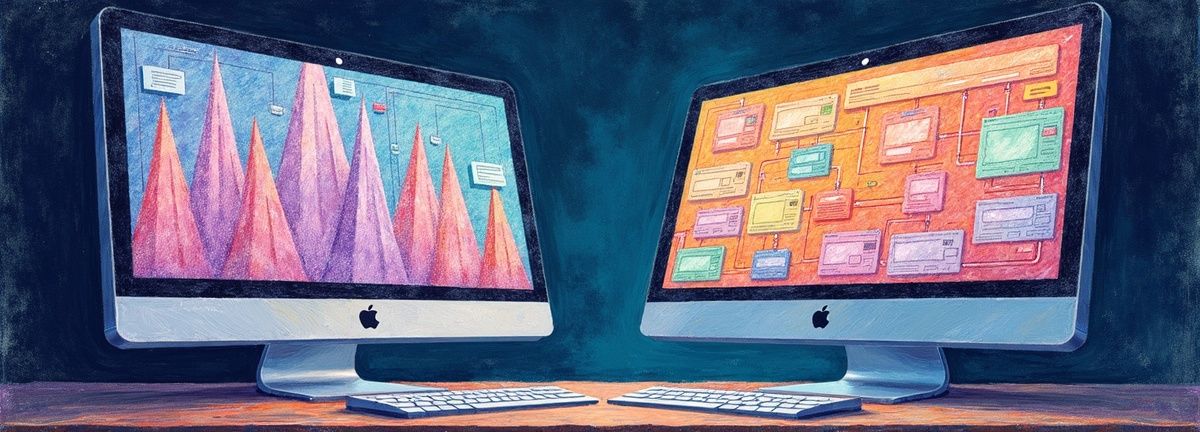
Here's how I handle a typical stakeholder meeting recording:
Step 1: Upload the recording to Scriptivox with speaker identification enabled. For a 60-minute meeting, I get a complete transcript with word-level timestamps in about 4 minutes.
Step 2: Review and correct speaker labels. This step is critical because wrong attribution makes evidence worthless. I scan for speaker transitions and fix any obvious errors.
Step 3: Export the transcript and run my evidence extraction prompt. I ask the AI to identify all decisions, commitments, deadlines, and concerns with timestamps and quotes.
Step 4: Build the evidence table from the extraction results. Each row gets one atomic claim with supporting quotes.
Step 5: Spot-check 5-10 citations by jumping to those timestamps in the original audio. I'm looking for context that might change meaning or quotes that don't actually support the claims.
Step 6: Create the stakeholder summary with embedded citations. Every bullet point links back to the evidence table.
This process takes about 15 minutes for an hour-long meeting, compared to 45+ minutes when I try to manually extract evidence from a standard transcript.
Common Evidence Pitfalls and Fixes
Quote Laundering: Using one broad statement to justify multiple specific claims. Fix by limiting each claim to 1-2 directly supporting quotes.
Context Drift: Citations that sound different when you hear the surrounding discussion. Always listen to 15-20 seconds before and after cited timestamps during spot-checks.
Speaker Misattribution: Wrong names on quotes, especially in heated discussions. Verify speaker transitions manually rather than trusting auto-detection completely.
Timestamp Drift: Citations pointing to wrong moments due to audio preprocessing. Use consistent source files and verify timestamps against your original recording.
Implied vs. Stated: Treating implications as facts. Mark interpretations clearly and require explicit statements for commitments and deadlines.
When Evidence Requirements Make Sense
Not every document needs full evidence tables. Use strict evidence protocols for:
- Executive and board meeting summaries
- Client commitments and project deliverables
- Legal, compliance, or HR discussions
- Research interviews supporting published findings
- Any meeting where wrong information creates downstream problems
For internal brainstorming or early-stage discussions, lighter evidence (just citing key decisions and actions) often suffices.
Advanced Evidence Techniques
Multi-Source Verification: When the same topic comes up in multiple meetings, create evidence tables that cross-reference discussions. This helps track how decisions evolve over time.
Confidence Scoring: Rate each piece of evidence based on audio quality and speaker clarity. Low-confidence items get flagged for follow-up confirmation.
Evidence Decay Warnings: Add timestamps showing when information was captured. Month-old meeting notes should include "as of [date]" warnings since circumstances change.
Automated Evidence Checking: Set up workflows that flag when new meeting transcripts contradict previous evidence. Useful for tracking project scope changes or shifting priorities.
Quality Control Before Sharing
Before sending evidence-based summaries to stakeholders:
Coverage Check: Every summary bullet has at least one citation Spot-Check Verification: Listen to 8-10 random citations to confirm accuracy Context Review: Check surrounding discussion for any contradictions or reversals Attribution Verification: Confirm the right people are credited with statements Action Item Reality Check: Ensure owners and deadlines were explicitly stated, not assumed
If more than 20% of your spot-checks reveal problems, don't share the summary yet. Fix the underlying issues first.
AI Transcription Tools for Evidence Work
| Tool | Strengths | Weaknesses | Best For |
|---|---|---|---|
| Otter.ai | Decent speaker identification | Struggles with precise timestamps | Casual meetings |
| Rev | Human transcription accuracy | Lacks advanced AI features | Clean transcripts only |
| Descript | Excels at editing and audio manipulation | Doesn't focus on evidence-based output | Audio editing workflows |
| Scriptivox | Word-level timestamps, AI transcript chat | Not mentioned | Evidence-focused workflows |
Frequently Asked Questions
About the author

Arsh co-founded Scriptivox and built the core of what it runs on: the AI models, the API, the meeting bot, and the technical infrastructure that keeps transcripts accurate at scale. He also handles customer support directly, because the people building the product should be the ones talking to the people using it. He writes about real transcription workflows for legal, research, and content teams, grounded in the systems he ships and maintains himself.