A major entertainment distributor just cracked the code on affordable content localization. Verbit's dubbing technology enables Banijay Rights' delivery of localised programming to Latin America, transforming over 300 hours of content for Spanish and Brazilian Portuguese markets. Behind this success lies a critical but often overlooked component: accurate dubbing transcription.
Most content creators think dubbing starts with voice actors. It actually starts with text. Without precise, timestamped transcripts, dubbing projects spiral into expensive reshoots and misaligned audio. The smartest content teams now treat transcription as the foundation of their entire localization pipeline.
What Is Dubbing Transcription?
Dubbing transcription converts original audio dialogue into timestamped text, providing the script foundation for voice actors to record new language versions. Unlike standard transcription, dubbing transcription requires word-level timing precision to match lip movements and scene cuts.
The Hidden Economics of Content Localization
Content distributors face a brutal math problem. A single hour of professional dubbing costs $3,000-8,000 per language. For a 10-episode series, that's $30,000-80,000 just for Spanish dubbing. Most archives sit untapped because traditional localization economics don't work.
The breakthrough comes from hybrid approaches combining AI transcription with human expertise. Instead of manual script creation taking days, accurate transcripts appear in hours. Voice actors work from precise timing guides rather than guessing sync points.
Banijay Rights' success with their Latin American expansion proves this model works at scale. They localized multiple seasons across two languages while maintaining broadcast quality standards. The key was starting with rock-solid transcripts.
Technology Transcription vs. Traditional Methods
Traditional dubbing workflows follow a painful sequence:
- Manual script extraction (2-3 days per hour of content)
- Translation without timing context
- Voice recording with approximate sync
- Multiple revision cycles for timing fixes
- Audio engineering to force alignment
Modern technology transcription flips this process:
- AI generates word-level transcripts in minutes
- Timestamps guide precise translation timing
- Voice actors record to exact cue marks
- Minimal post-production alignment needed
- Broadcast-ready output in days, not weeks
I've watched teams switch from 3-week dubbing cycles to 5-day turnarounds using this approach. The time savings compound across multiple languages and seasons.
Platform Comparison: Dubbing Transcription Solutions
Three types of platforms handle dubbing transcription, each with distinct trade-offs:
Enterprise Solutions (Verbit, Rev Business) Verbit's transcription service integrates human review with AI processing, targeting large content distributors. They offer dedicated account management and custom workflows but require minimum commitments. Rev Business provides similar hybrid services with faster turnarounds for smaller batches.
AI-First Platforms (Otter.ai Business, Trint) Otter focuses on meeting transcription but their speaker identification works for dubbing projects with clear dialogue. Trint offers better multilingual support and exports suitable for translation teams. Both lack the timing precision needed for professional dubbing without additional processing.
Specialized Transcription Tools (Scriptivox) Platforms built specifically for media workflows offer the best balance. Word-level timestamps, 100-language support, and export formats designed for translation teams. The key advantage is cost - at $0.20 per hour of audio through the API, teams can affordably test multiple approaches.
For content teams evaluating options, the deciding factors are volume, languages needed, and integration requirements. High-volume distributors need enterprise partnerships. Independent creators and smaller teams benefit from flexible, usage-based pricing.
Step-by-Step: Building Your Dubbing Transcription Workflow
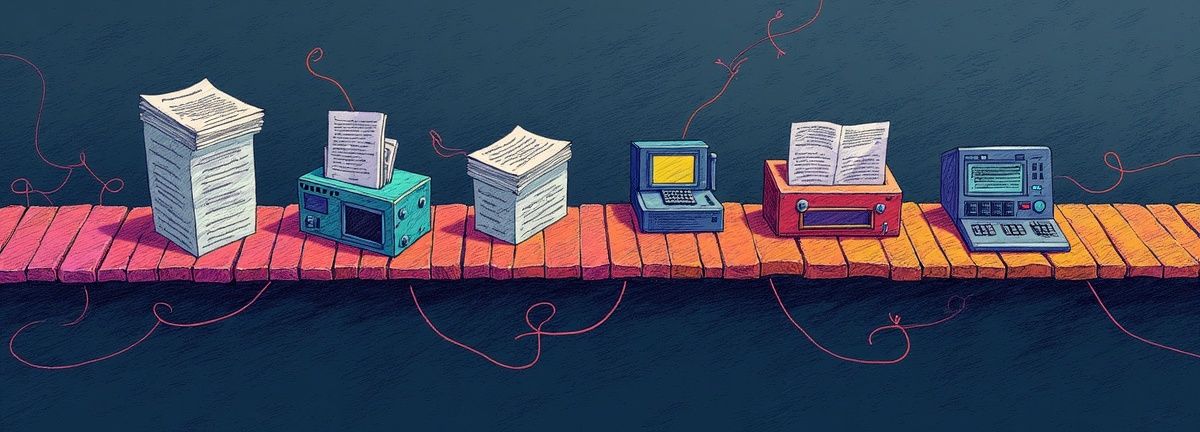
Here's how to set up a professional dubbing transcription pipeline:
Step 1: Audio Preparation Extract clean audio from your video source. Remove background music and sound effects if possible. Separate dialogue tracks provide the cleanest transcription input. Most video editing software can export dialogue-only WAV or MP3 files.
Step 2: Transcription Processing Upload your audio file to your chosen platform. Enable speaker identification if your content has multiple characters. For Scriptivox, select auto-detect for language detection or manually choose if you know the source language. Word-level timestamps are essential for dubbing work.
Step 3: Quality Review Even AI transcription requires human review for dubbing accuracy. Focus on:
- Character name accuracy for speaker labels
- Technical terms or proper nouns
- Emotional context markers (shouting, whispering)
- Scene transition points
Step 4: Export for Translation Export in SRT or VTT format to preserve timestamps. These formats integrate cleanly with translation management systems. Include speaker labels and timing codes in your translation brief.
Step 5: Voice Director Preparation Provide voice actors with both the translated script and original audio reference. Timing markers help them match pacing and emotional beats from the source performance.
This workflow scales from single episodes to entire series libraries. Teams processing multiple languages can parallelize translation while maintaining consistent timing across versions.
Common Dubbing Transcription Mistakes to Avoid
Content teams make predictable errors that derail dubbing projects:
Skipping Audio Cleanup Feeding raw video audio with music and effects creates messy transcripts. Voice actors struggle with unclear dialogue boundaries. Spend 10 minutes cleaning audio to save hours in revision.
Ignoring Speaker Context Generic "Speaker 1" and "Speaker 2" labels confuse translation teams. Character names and relationships matter for accurate cultural adaptation. Update speaker labels immediately after transcription.
Mixing Transcript Formats Switching between platforms mid-project creates format inconsistencies. Translation teams waste time reconciling timing differences. Pick your transcription approach and stick with it through project completion.
Underestimating Review Time Even 95% accurate transcripts need human review for dubbing quality. Budget 15-20 minutes of review per hour of content. Professional dubbing demands higher accuracy than meeting notes.
The Future of Content Localization
Verbit's success with Banijay Rights signals a broader shift in content distribution. Streaming platforms and FAST channels demand localized content at unprecedented scale and speed. Traditional dubbing economics can't meet this demand.
AI transcription enables what content strategists call "long tail localization" - making economic sense of smaller language markets and niche content. A documentary series that couldn't justify $50,000 in dubbing costs becomes profitable at $5,000 through efficient transcription workflows.
The technology transcription advantage extends beyond cost savings. Faster turnarounds mean content reaches markets while still relevant. Cultural adaptation improves when translators work with precise timing context. Quality increases while budgets decrease.
Smart content teams are building transcription capabilities now, before their competitors recognize the strategic advantage.
Platform Comparison: Dubbing Transcription Solutions
| Platform Type | Key Features | Best For | Pricing Model |
|---|---|---|---|
| Enterprise Solutions | Human review, custom workflows, account management | Large content distributors | Minimum commitments required |
| AI-First Platforms | Speaker identification, multilingual support, fast turnarounds | Smaller batches, clear dialogue | Usage-based pricing |
| Specialized Tools | Word-level timestamps, 100-language support, media workflows | Independent creators, flexible teams | $0.20 per audio hour |
Frequently Asked Questions
About the author
Abhishek co-founded Scriptivox and built its early optimization and scalability layer — the part that turns a working transcription tool into one that holds up under real load. Today he leads growth and marketing at Scriptivox. He writes about transcription accuracy, multi-language coverage, and what it takes to build an AI transcription product that stays fast and reliable as it scales.