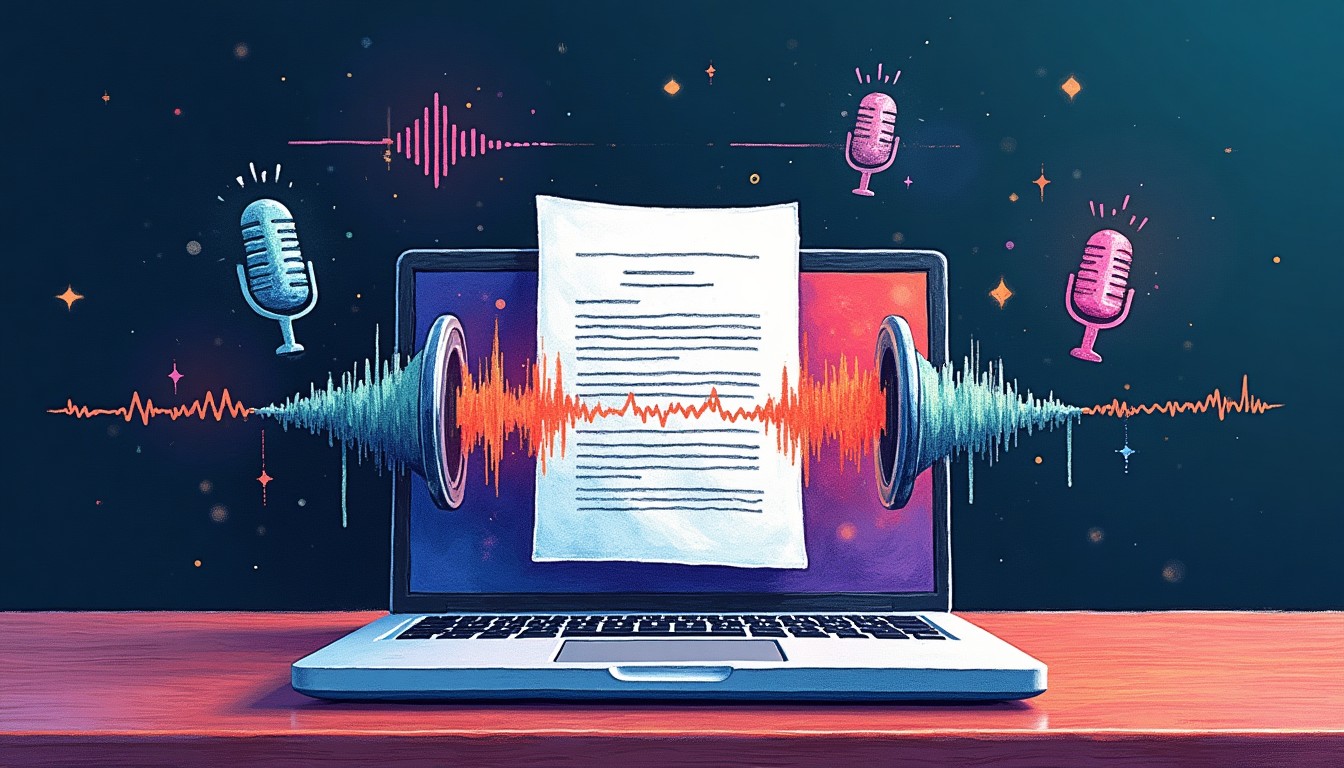
A veteran investigative reporter retires after 30 years, taking with her an encyclopedic memory of every source, every lead, and every connection that made her stories legendary. Meanwhile, the newsroom's basement houses thousands of hours of irreplaceable audio and video content that might as well be locked in a vault. When institutional knowledge walks out the door and your archives remain unsearchable, you're essentially starting from zero with every new story.
This isn't just a newsroom problem. It's the reality for any organization sitting on years of recorded content that could be pure gold if only you could find what you need when you need it.
What Is Audio Archive Transcription?
Audio archive transcription is the process of converting large collections of recorded audio and video files into searchable, time-stamped text documents. Unlike transcribing individual files as needed, archive transcription tackles entire libraries at once, transforming decades of unsearchable content into an instantly accessible knowledge base.
The Hidden Cost of Unsearchable Archives
Most organizations accumulate audio and video content faster than they can organize it. That 2019 city council meeting where the mayor first hinted at budget cuts? It's somewhere in there. The raw interview footage with the whistleblower who broke the corruption story? Filed away but effectively lost.
I've watched newsrooms spend entire days hunting for a specific quote or trying to remember which interview contained a crucial detail. One investigative team I know spent 40 hours manually reviewing old recordings to find mentions of a key figure, only to discover they'd missed two critical references buried in the middle of long files.
The math is brutal. If your reporters spend even 2 hours per week searching through old audio files, that's 104 hours annually per person. At an average newsroom salary of $50,000, you're looking at roughly $2,500 per reporter in lost productivity searching for content that should be instantly accessible.
How Modern Transcription Transforms Archives
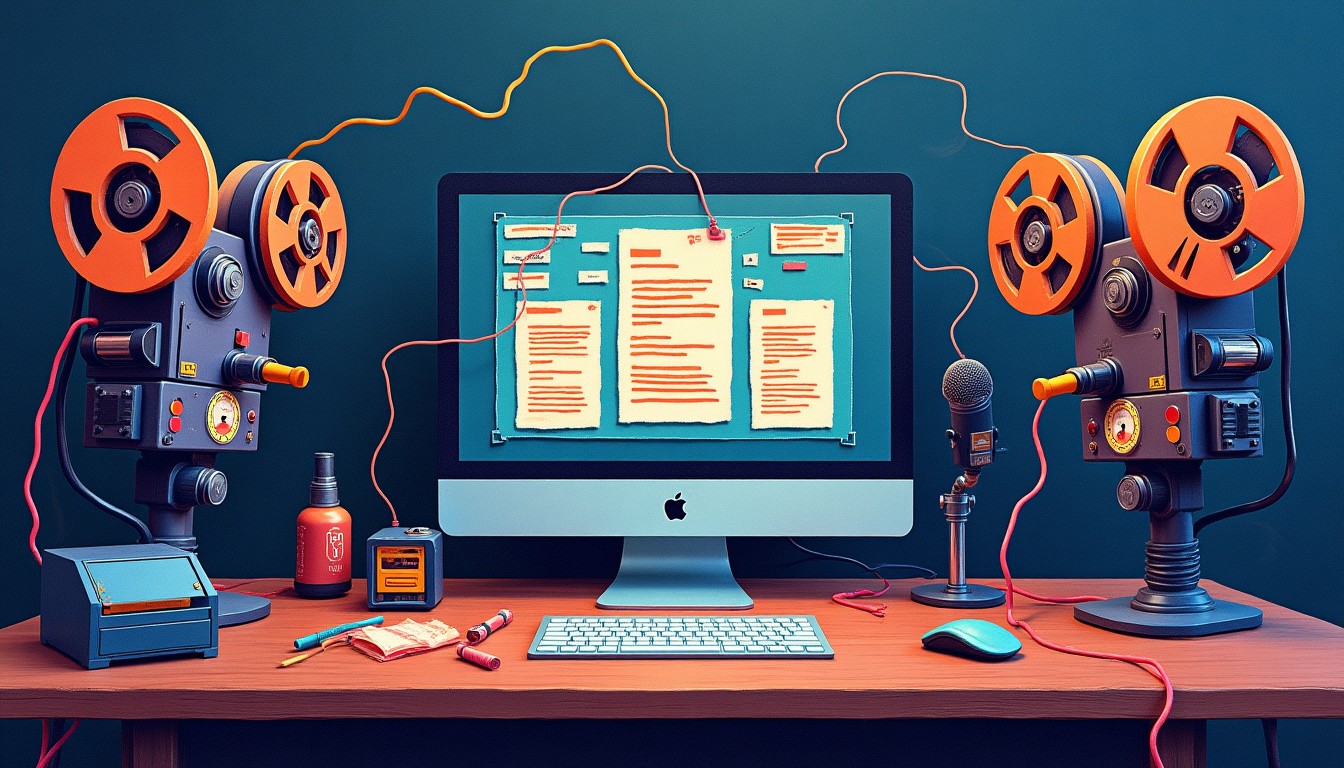
The breakthrough came when AI transcription accuracy crossed the 95% threshold for clear audio. Suddenly, bulk processing became viable. Instead of transcribing files one by one as you need them, you can now process entire archives and make everything searchable at once.
I tested this approach with Scriptivox using a collection of 200 interview files spanning five years. The platform processed all 200 files overnight, generating word-level timestamps and speaker identification for each one. The result? What used to require manual listening to find specific quotes now takes seconds with a simple text search.
The game-changer is word-level timestamps. When you search for "budget shortfall," you don't just get a list of files that mention it. You get the exact minute and second where it's discussed in each recording. Click once, and you're listening to the precise moment.
Building Your Searchable Knowledge Base
Start with your highest-value content. These are usually your interview recordings, meeting audio, and investigative materials. Ignore the low-quality recordings or casual conversations that won't provide future value.
Organize files before processing. Create folders by beat (politics, sports, business), by year, or by project. This structure carries over into your transcripts and makes searching more targeted. When you're looking for environmental coverage from 2023, you can search within that specific subset instead of your entire archive.
Choose transcription settings carefully. If your files have multiple speakers, enable speaker identification. For interviews with known participants, you can rename "Speaker 1" to "Mayor Johnson" after transcription, making searches even more precise.
The quality of your original recordings matters more than you might expect. Files with clear audio and minimal background noise can achieve 98%+ accuracy, while noisy recordings might hit 85-90%. That difference compounds when you're searching thousands of files.
Practical Applications Beyond Basic Search
Cross-reference investigations become incredibly powerful with searchable archives. Last month, I helped a newsroom trace connections between a current corruption case and similar patterns from 2018. By searching for specific company names and official titles across their entire archive, they found three related stories that had been scattered across different beats and years.
Content repurposing transforms from guesswork into precision targeting. Planning a retrospective on local election promises? Search for "campaign pledge" or "promised voters" across multiple election cycles and extract the exact soundbites you need. That 10th anniversary coverage of a major story becomes much richer when you can pull relevant quotes from the original interviews.
Source verification gets a massive upgrade. When someone claims they "never said that," you can search your archives instantly. If they did say it, you have the timestamp and context. If they didn't, you've cleared them in seconds instead of spending hours second-guessing your memory.
Real ROI From Archive Transcription

The return on investment shows up in three areas: time savings, story quality, and competitive advantage.
Time savings are immediate and measurable. That 40-hour search I mentioned earlier? It becomes a 30-second text search. Even accounting for transcription costs, most newsrooms break even within the first month just from researcher productivity gains.
Story quality improves because reporters can find connections they would have missed. When you can instantly search five years of city council meetings for every mention of a developer's name, you're going to catch patterns that manual review would never uncover.
Competitive advantage matters more than most organizations realize. While competitors are still hunting through files manually, you're connecting dots across years of coverage. You're first to spot recurring themes, first to notice when officials contradict previous statements, first to provide the historical context that elevates a news story into essential reading.
Getting Started With Your Archive
Start small with a pilot project. Pick 50-100 of your most valuable recordings from the past year. Test the transcription quality, experiment with search strategies, and measure the time savings. This proves the concept before you commit to processing decades of content.
For the pilot, focus on audio file quality. MP3s at 128kbps or higher work well. WAV files are ideal. Avoid heavily compressed formats or files with significant audio distortion.
Set realistic expectations for accuracy. Phone interviews typically hit 85-90% accuracy, studio interviews reach 95%+, and meeting recordings fall somewhere in between depending on audio quality and speaker overlap.
Plan your workflow before processing thousands of files. Decide how you'll organize folders, whether you'll add tags or metadata, and how different team members will access the searchable content. The technical setup is the easy part; the organizational system determines whether this becomes truly useful or just another database that nobody uses.
You can test this approach free at Scriptivox with up to three files per day. Upload a few representative samples from your archive to see how the transcription quality and search functionality work with your specific content.
Beyond Newsrooms: Universal Archive Value
While I've focused on newsroom examples, the same principles apply to any organization with significant audio archives. Legal firms reviewing depositions, researchers analyzing interview data, podcasters mining old episodes for clip shows, or corporate teams searching through years of recorded meetings all benefit from the same workflow.
The key insight remains consistent: unsearchable content might as well not exist. When you can transform your audio archives into a searchable knowledge base, you're not just solving a storage problem. You're creating a competitive advantage that compounds over time.
Your archives represent years of institutional knowledge that currently lives in the memories of veteran staff. Make that knowledge searchable, and it becomes a permanent asset that survives personnel changes and serves every future team member who needs to understand what came before.
Frequently Asked Questions
About the author

Arsh co-founded Scriptivox and built the core of what it runs on: the AI models, the API, the meeting bot, and the technical infrastructure that keeps transcripts accurate at scale. He also handles customer support directly, because the people building the product should be the ones talking to the people using it. He writes about real transcription workflows for legal, research, and content teams, grounded in the systems he ships and maintains himself.