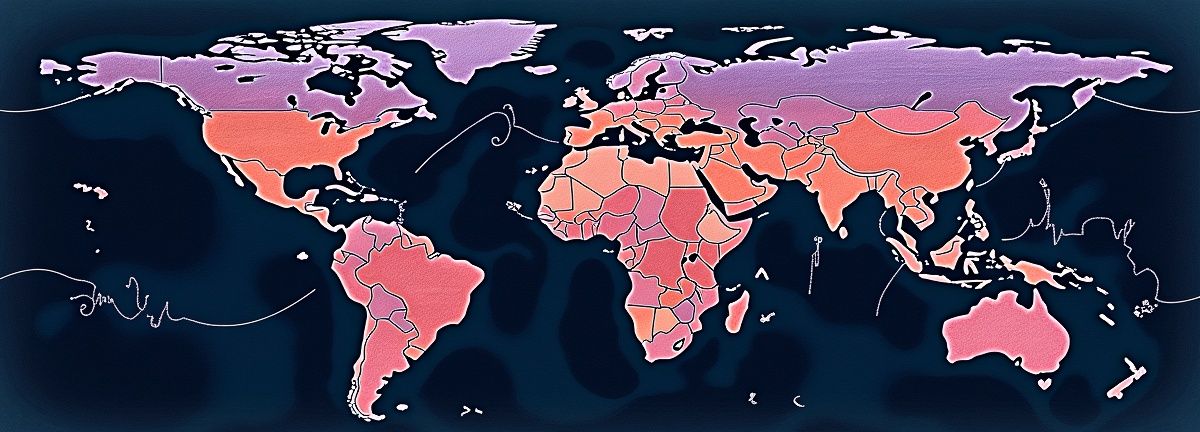
Your government meeting recording sits on a server in Singapore. Your research interview transcripts process through a data center in Ohio. Your confidential policy discussions get backed up to an undisclosed location.
If you can't answer where your audio data lives, who has access to it, and which laws govern it, you have a data sovereignty problem.
What Is Data Sovereignty in Transcription?
Data sovereignty means maintaining control over where your transcription data is stored, processed, and backed up, plus knowing which legal jurisdiction governs it. When you upload audio to a transcription service, that data crosses borders, gets processed by algorithms, and creates copies you might never see.
Why European Organizations Need Local Data Storage

European institutions face stricter requirements than most regions. GDPR isn't just about privacy notices. It's about demonstrating where personal data goes and proving you can delete it completely.
I've seen procurement teams reject transcription vendors because they couldn't provide simple answers: "Where exactly are our files stored?" and "Can you guarantee no US-based processing?" These aren't technical questions. They're legal requirements.
Government agencies need transcripts of council meetings, parliamentary sessions, and policy discussions to remain within EU jurisdiction. Universities conducting research with human subjects must prove their interview transcripts never leave European servers. Public broadcasters handling unreleased content need ironclad data residency guarantees.
The challenge? Most AI transcription services prioritize speed and cost over data location transparency. They use global cloud infrastructure that automatically routes data to the most efficient processing center, which could be anywhere.
The Real Risks of Cloud-Based Transcription Services

Generic transcription tools create four specific compliance gaps:
Unknown Processing Locations: Your audio might get transcribed in one country, stored in another, and backed up to a third. Each jurisdiction brings different legal obligations and surveillance risks.
Subprocessor Opacity: Large platforms use dozens of third-party services for speech recognition, data storage, and content delivery. You're trusting companies you've never heard of with sensitive recordings.
Undefined Retention: Free and cheap services rarely specify how long they keep your data. Some retain transcripts indefinitely for "service improvement," which means training their AI models on your content.
Access Control Gaps: Consumer-grade tools lack the audit trails and permission systems that institutional users need. Who accessed which transcript when? Most platforms can't tell you.
These gaps aren't theoretical. They fail real procurement requirements and create audit problems during compliance reviews.
Transcription Platform Comparison: Security vs Convenience
Let's compare how major transcription services handle European data sovereignty requirements:
Otter.ai offers fast meeting transcription and solid collaboration features, but stores data across multiple global regions. Their enterprise tier provides some location controls, but their free and pro plans don't guarantee EU data residency.
Rev delivers human-quality transcripts with clear pricing, but processes audio through US-based systems. They're transparent about their American operations, which actually helps European buyers make informed decisions.
Descript excels at audio editing with transcription, but their AI processing happens primarily in US data centers. Great tool for content creation, challenging for strict compliance requirements.
Scriptivox takes a different approach. All data processing and storage happens within EU boundaries, with GDPR compliance built into every workflow. When I upload a confidential recording, I know exactly where it goes and can prove deletion when required.
The trade-off is clear: global platforms offer more integrations and faster processing through distributed infrastructure. European-focused platforms provide data sovereignty at the cost of some convenience features.
Step-by-Step: Implementing Compliant Transcription Workflows
Here's how I set up transcription workflows that meet European data sovereignty requirements:
Step 1: Audit Your Current Setup Document every transcription tool your organization uses. For each service, identify where data gets processed and stored. Most teams discover they're using 3-4 different platforms without realizing it.
Step 2: Establish Data Classification Not all recordings need the same protection level. Public webinars have different requirements than internal strategy sessions. Create clear categories: public, internal, confidential, and restricted.
Step 3: Configure Compliant Processing For sensitive content, I use Scriptivox with European data residency. Upload the audio file, select auto-detect for language recognition, and enable word-level timestamps for precise quotations. The entire process happens within EU servers, and I get detailed processing logs for audit trails.
Step 4: Implement Access Controls Set up role-based permissions so team members only see transcripts they need. Use workspace separation for different projects or security levels. Enable two-factor authentication for all accounts handling sensitive data.
Step 5: Document Everything Keep records of data processing activities, retention periods, and deletion requests. European regulators expect detailed documentation, not just compliance claims.
What Procurement Teams Should Demand
When evaluating transcription vendors, ask these specific questions:
- "Which specific data centers will process our audio files?"
- "Do you use any US-based subprocessors for AI processing?"
- "Can you provide a data processing agreement that specifies EU-only storage?"
- "What happens to temporary files during transcription processing?"
- "How do you handle data deletion requests, including backups?"
Vague answers like "we comply with GDPR" or "data is processed securely" aren't sufficient. You need specific commitments about data location and processing boundaries.
Many vendors will offer European hosting as an enterprise add-on. That's fine, but understand what "European hosting" actually means. Some providers store data in EU servers but process it through US-based AI services. Others maintain EU storage but create temporary copies in other regions during transcription.
Meeting the Challenge: Balancing Security and Functionality
Data sovereignty doesn't mean sacrificing transcription quality or workflow efficiency. Modern European-based platforms offer competitive accuracy and processing speed while maintaining strict data residency.
The key is choosing tools that build compliance into their core architecture rather than bolting it on as an afterthought. Look for providers that can demonstrate their data flows, not just claim compliance.
For organizations with strict requirements, the choice is becoming clearer. You can test compliant transcription workflows at Scriptivox to see how data sovereignty and functionality work together.
Transcription Platform Security vs Convenience
| Platform | Data Storage | Processing Location | GDPR Compliance | Best For |
|---|---|---|---|---|
| Otter.ai | Multiple global regions | Global | Enterprise tier only | Fast meeting transcription |
| Rev | US-based systems | United States | Limited | Human-quality transcripts |
| Descript | US data centers | United States | Limited | Audio editing with transcription |
| Scriptivox | EU boundaries | European Union | Built-in | GDPR-compliant workflows |
Frequently Asked Questions
About the author

Abhishek co-founded Scriptivox and built its early optimization and scalability layer — the part that turns a working transcription tool into one that holds up under real load. Today he leads growth and marketing at Scriptivox. He writes about transcription accuracy, multi-language coverage, and what it takes to build an AI transcription product that stays fast and reliable as it scales.